July 2026 Temperature Update
June 2026 was the 2nd warmest June on record. El Niño is growing rapidly and is likely to reach record high intensity by the end of the year.

June 2026 was the 2nd warmest June on record. El Niño is growing rapidly and is likely to reach record high intensity by the end of the year.
June 2026 was the 2nd warmest June on record. El Niño is growing rapidly and is likely to reach record high intensity by the end of the year.
June 2026 was the 2nd warmest June on record. El Niño is growing rapidly and is likely to reach record high intensity by the end of the year.
June 2026 was the 2nd warmest June on record. El Niño is growing rapidly and is likely to reach record high intensity by the end of the year.
June 2026 was the 2nd warmest June on record. El Niño is growing rapidly and is likely to reach record high intensity by the end of the year.
June 2026 was the 2nd warmest June on record. El Niño is growing rapidly and is likely to reach record high intensity by the end of the year.
June 2026 was the 2nd warmest June on record. El Niño is growing rapidly and is likely to reach record high intensity by the end of the year.
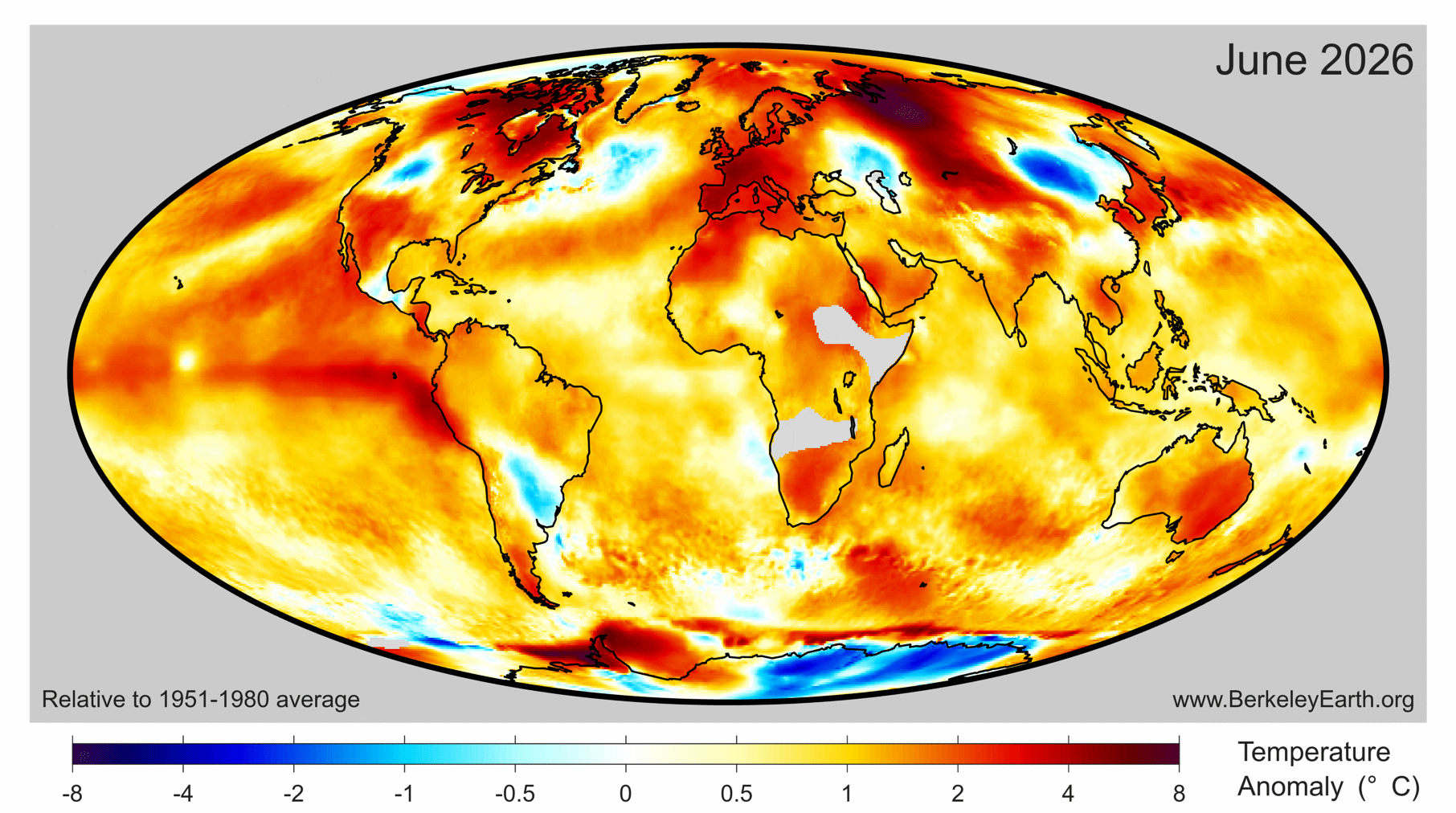
June 2026 was the 2nd warmest June on record. El Niño is growing rapidly and is likely to reach record high intensity by the end of the year.
June 2026 was the 2nd warmest June on record. El Niño is growing rapidly and is likely to reach record high intensity by the end of the year.
June 2026 was the 2nd warmest June on record. El Niño is growing rapidly and is likely to reach record high intensity by the end of the year.
June 2026 was the 2nd warmest June on record. El Niño is growing rapidly and is likely to reach record high intensity by the end of the year.
June 2026 was the 2nd warmest June on record. El Niño is growing rapidly and is likely to reach record high intensity by the end of the year.
June 2026 was the 2nd warmest June on record. El Niño is growing rapidly and is likely to reach record high intensity by the end of the year.
June 2026 was the 2nd warmest June on record. El Niño is growing rapidly and is likely to reach record high intensity by the end of the year.
June 2026 was the 2nd warmest June on record. El Niño is growing rapidly and is likely to reach record high intensity by the end of the year.
June 2026 was the 2nd warmest June on record. El Niño is growing rapidly and is likely to reach record high intensity by the end of the year.
June 2026 was the 2nd warmest June on record. El Niño is growing rapidly and is likely to reach record high intensity by the end of the year.
June 2026 was the 2nd warmest June on record. El Niño is growing rapidly and is likely to reach record high intensity by the end of the year.
June 2026 was the 2nd warmest June on record. El Niño is growing rapidly and is likely to reach record high intensity by the end of the year.
May 2026 was the 2nd warmest May on record. El Niño has returned and is expected to rapidly strength. There is a ~2.5% chance that 2026 becomes a record warm year, but higher odds of a record annual average in 2027 following El Niño.
May 2026 was the 2nd warmest May on record. El Niño has returned and is expected to rapidly strength. There is a ~2.5% chance that 2026 becomes a record warm year, but higher odds of a record annual average in 2027 following El Niño.
May 2026 was the 2nd warmest May on record. El Niño has returned and is expected to rapidly strength. There is a ~2.5% chance that 2026 becomes a record warm year, but higher odds of a record annual average in 2027 following El Niño.
May 2026 was the 2nd warmest May on record. El Niño has returned and is expected to rapidly strength. There is a ~2.5% chance that 2026 becomes a record warm year, but higher odds of a record annual average in 2027 following El Niño.
March 2026 was the 4th warmest March on record. La Niña has ended and El Niño is expected to return in coming months. There is a 5% chance that 2026 become a record warm year.
March 2026 was the 4th warmest March on record. La Niña has ended and El Niño is expected to return in coming months. There is a 5% chance that 2026 become a record warm year.
March 2026 was the 4th warmest March on record. La Niña has ended and El Niño is expected to return in coming months. There is a 5% chance that 2026 become a record warm year.
March 2026 was the 4th warmest March on record. La Niña has ended and El Niño is expected to return in coming months. There is a 5% chance that 2026 become a record warm year.
March 2026 was the 4th warmest March on record. La Niña has ended and El Niño is expected to return in coming months. There is a 5% chance that 2026 become a record warm year.
March 2026 was the 4th warmest March on record. La Niña has ended and El Niño is expected to return in coming months. There is a 5% chance that 2026 become a record warm year.
March 2026 was the 4th warmest March on record. La Niña has ended and El Niño is expected to return in coming months. There is a 5% chance that 2026 become a record warm year.
March 2026 was the 4th warmest March on record. La Niña has ended and El Niño is expected to return in coming months. There is a 5% chance that 2026 become a record warm year.
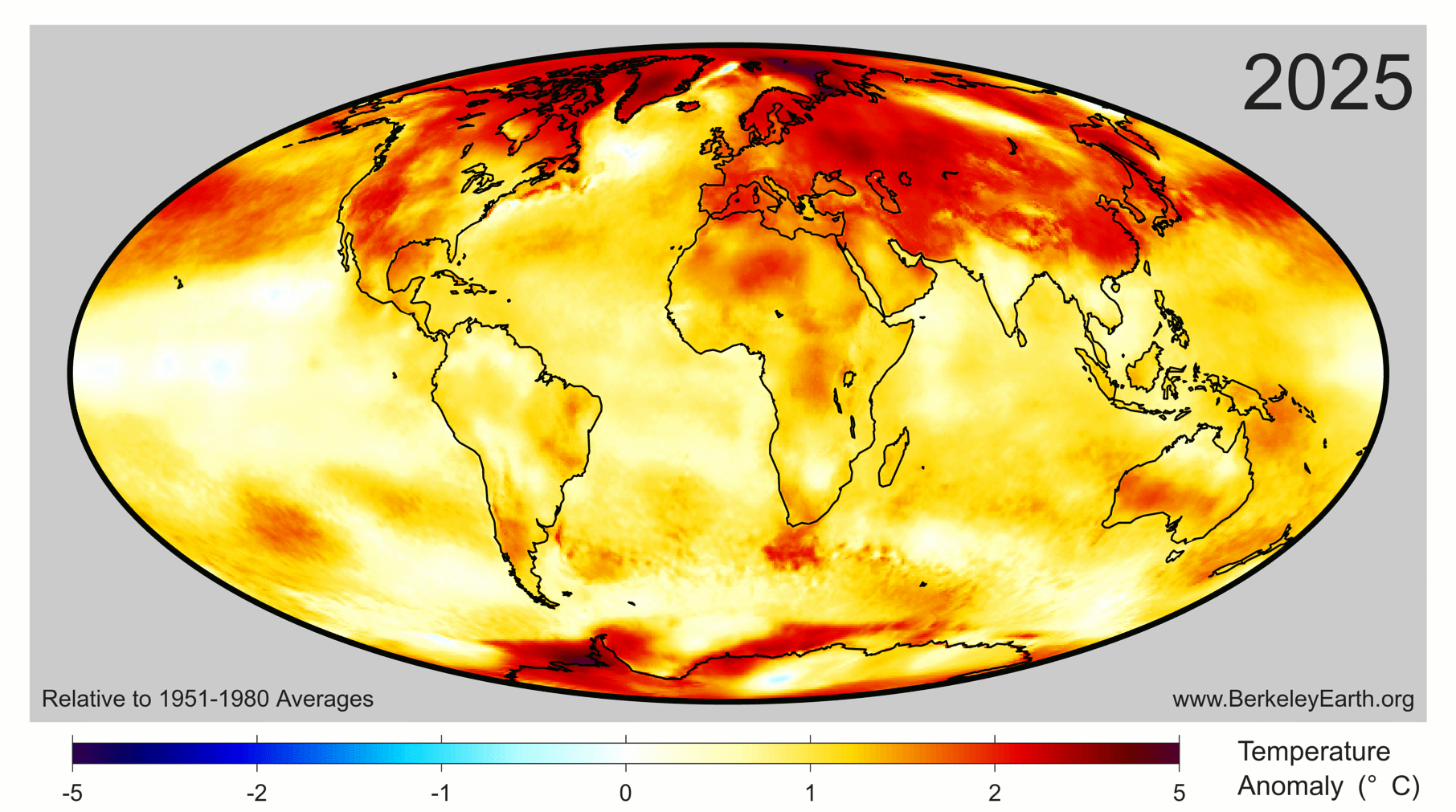
2025 was the 3rd warmest year on Earth since direct observations began. In Berkeley Earth’s analysis 2025 was 1.44 °C above our 1850-1900 average. The recent rate of warming is faster than historical trends. Extra warming appears to be related to a recent decrease in low cloud cover and man-made sulfur aerosols.
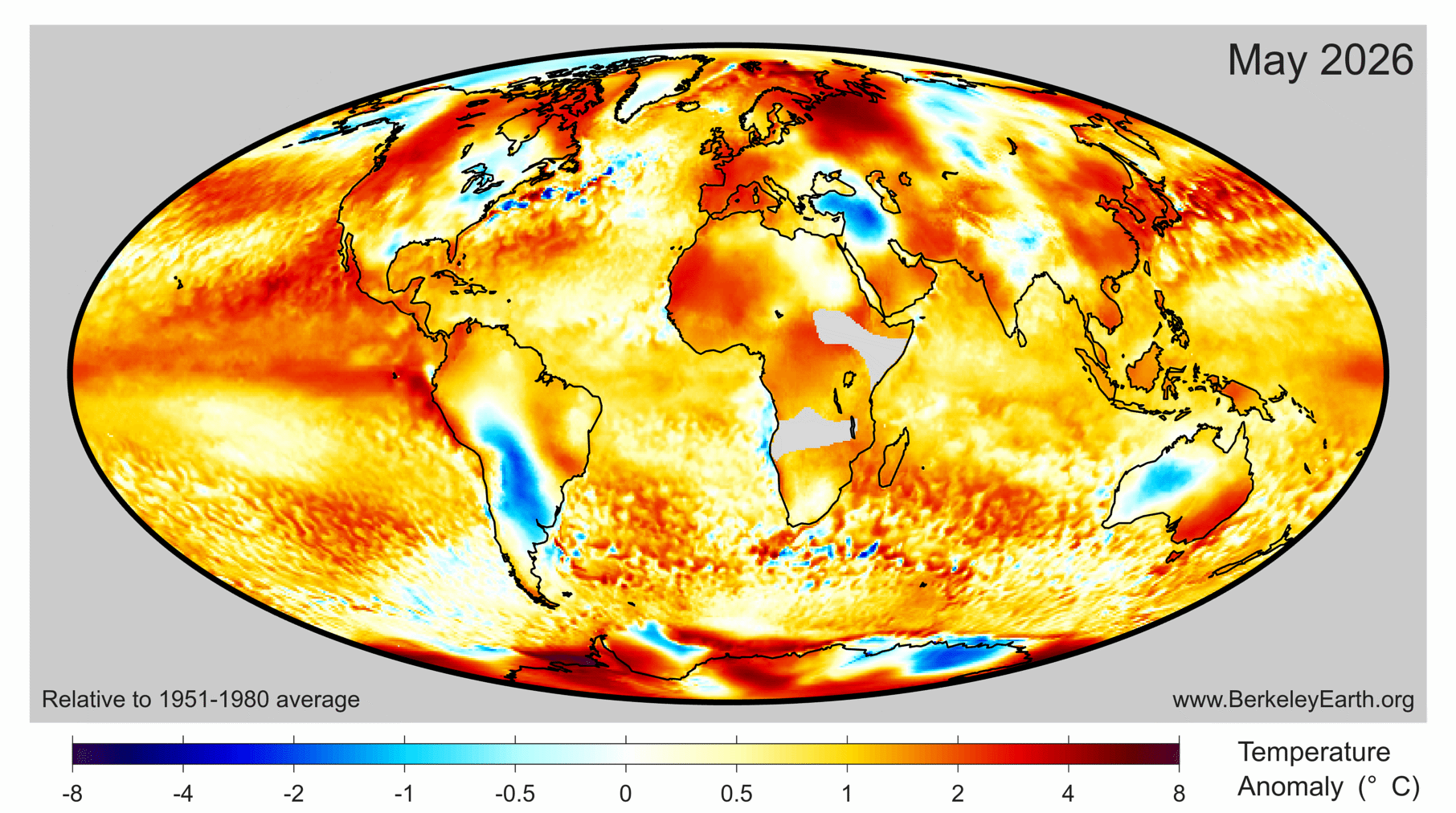
May 2026 was the 2nd warmest May on record. El Niño has returned and is expected to rapidly strength. There is a ~2.5% chance that 2026 becomes a record warm year, but higher odds of a record annual average in 2027 following El Niño.

March 2026 was the 4th warmest March on record. La Niña has ended and El Niño is expected to return in coming months. There is a 5% chance that 2026 become a record warm year.
February 2026 was the 2nd warmest February on record behind 2024. La Niña is fading and El Niño is expected to return in coming months. There is a 16% chance that 2026 become a record warm year.
October 2025 was the 3rd warmest October on record behind 2023 and 2024. 2025 is likely to become the third warmest year on record. Transition to La Niña with a likely return to Neutral this winter.

September 2025 was the 3rd warmest September on record behind 2023 and 2024. 2025 is likely to become the third warmest year on record. ENSO neutral persists with a likely transition to La Niña before the end of the year.
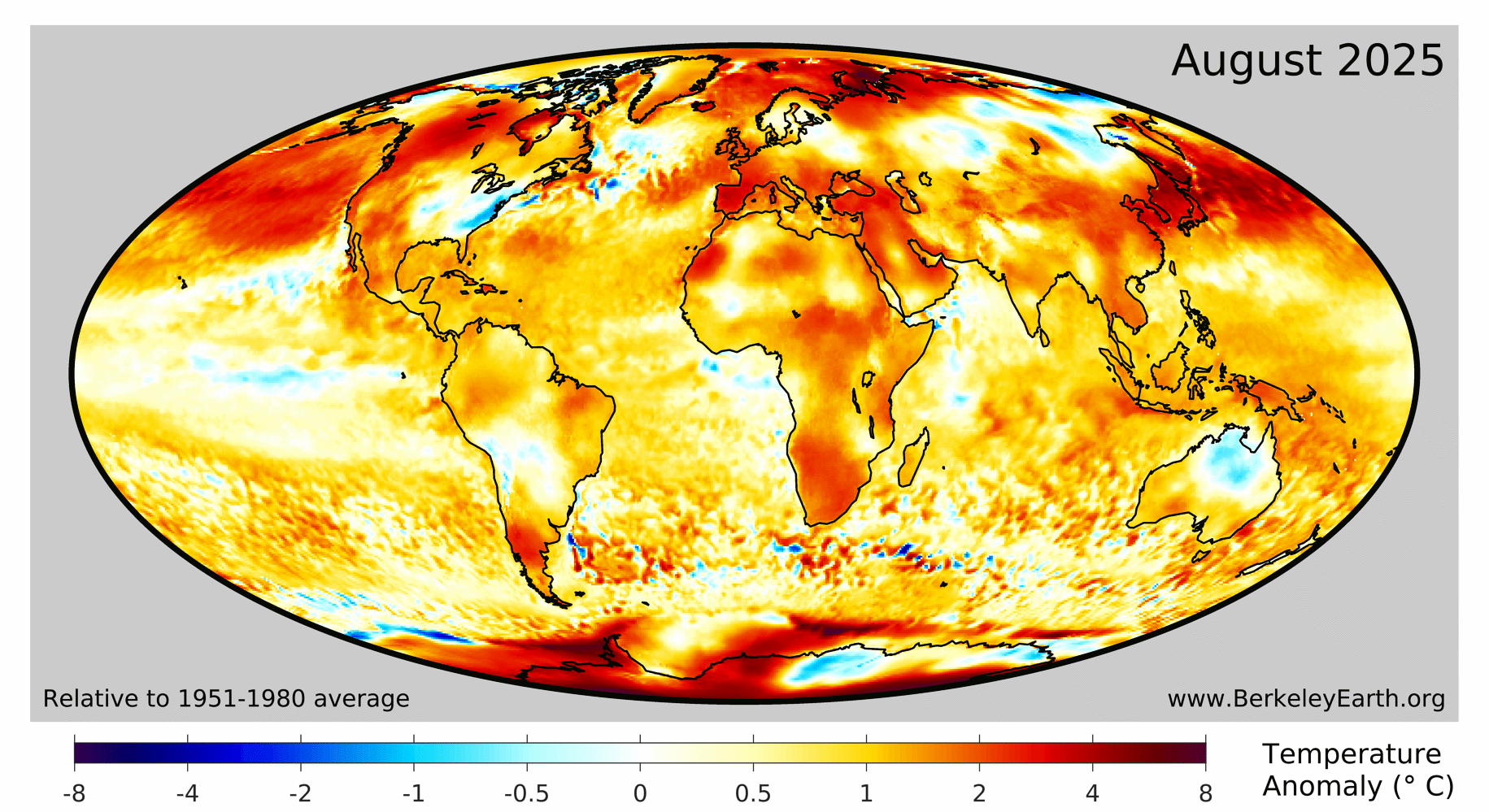
August 2025 was the 3rd warmest August on record behind 2023 and 2024. 2025 is likely to become the third warmest year on record. ENSO neutral persists with a likely transition to La Niña later this year.
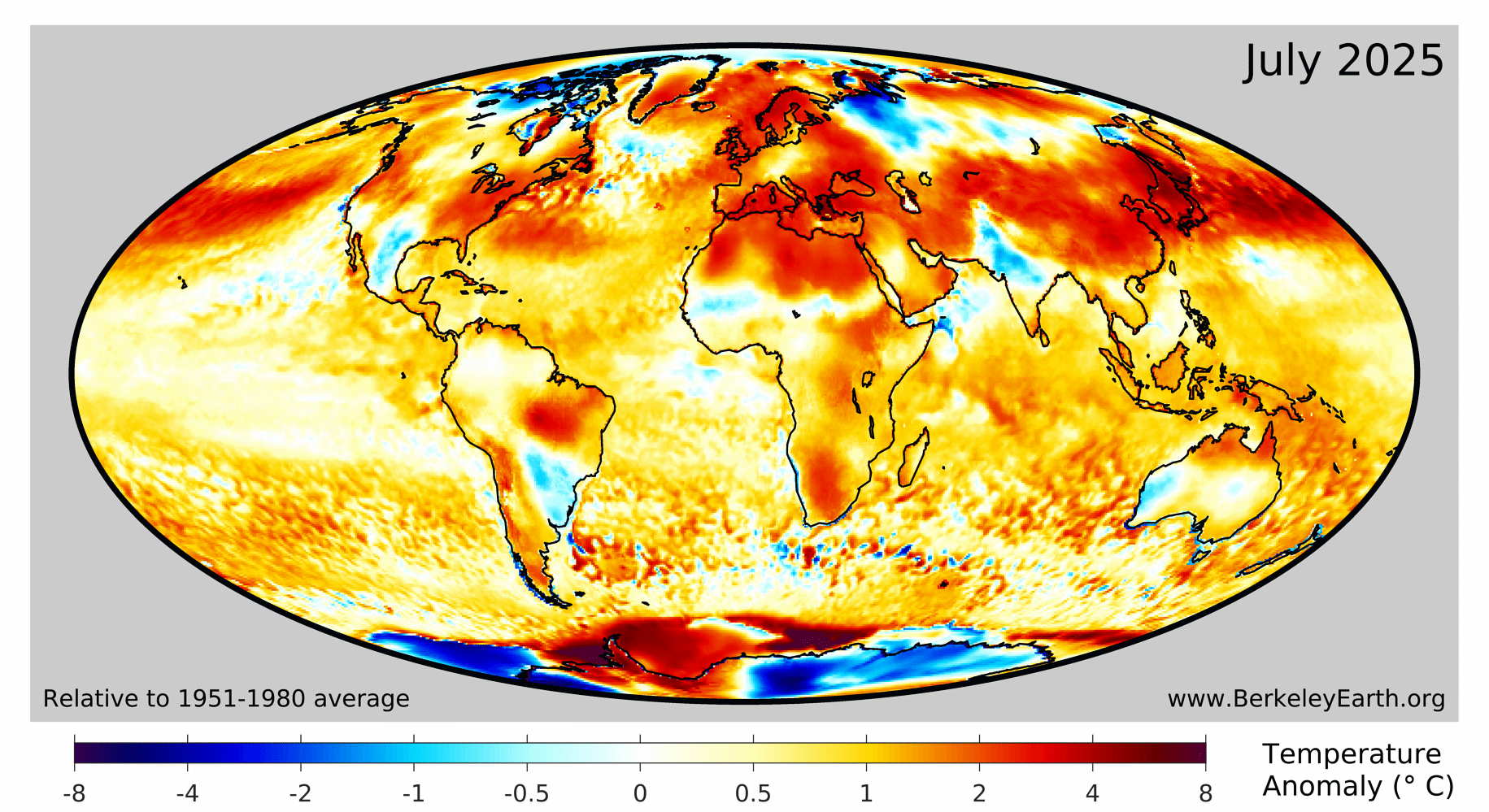
July 2025 was the 3rd warmest July on record behind 2023 and 2024. 2025 is likely to become the third warmest year on record. ENSO neutral persists.

June 2025 was the 3rd warmest June on record behind 2023 and 2024. There is now a 64% chance that 2025 will be the third warmest year on record. ENSO neutral persists.

May 2025 was the 2nd warmest May on record behind 2024. The chance of record warmth in 2025 has declined to 5%. An ENSO neutral condition persists and is expected to continue throughout the summer.

April 2025 is the second warmest April on record, behind April 2024 by 0.07 °C. 2025 has a 53% chance to be the second warmest year on record, and a 52% to be above 1.5 °C.

March 2025 tied 2024 and 2016 for the warmest March on record. 2025 has a 34% chance to be a record-breaking year. ENSO transitioned to a neutral state.

February 2025 was the third warmest February on record, behind 2024 and 2020. However, there is now a ~38% chance that 2025 will be the warmest year on record, which is 8% more than the estimate made last month.

Globally, January 2025 was the warmest January on record, surpassing January 2024 by 0.09 °C. This is a surprising result given the La Niña event that began in December. There is now a ~30% chance that 2025 will be the warmest year on record (up from ~6% from the start of the year).

2024 was warmest year on Earth since direct observations began. In Berkeley Earth’s analysis 2024 was 1.62 °C above our 1850-1900 average, making it the second year above 1.5 °C. The recent warming appears faster than expected.

Berkeley Earth, a non-profit research organization, is releasing a beta version of its new High-Resolution Temperature Dataset. Representing a significant improvement over the existing, peer-reviewed data set, the Berkeley Earth High Resolution Data Set incorporates machine learning technology to reproduce small-scale temperature variations, allowing for unprecedented spatial resolution relative to existing products. At 0.25° x […]

2023 was warmest year on Earth since direct observations began. In Berkeley Earth’s analysis 2023 was 1.54 °C above our 1850-1900 average, making it the first year above 1.5 °C. The extreme heat was due to a combination of natural and man-made factors, including global warming and an emerging El Niño event. 17% of the Earth’s surface had a locally warmest year, affecting 2.3 billion people, including significant parts of Asia, South and Central America.

2022 was nominally the fifth warmest year since record keeping began in 1850, as La Niña as kept temperatures a bit cooler. 28 countries, including most of Western Europe, New Zealand, and China set new record high annual averages.

2021 was nominally the sixth warmest year since record keeping began in 1850. 25 countries, including China, Nigeria, and South Korea, set new record high annual averages.

Berkeley Earth, a California-based non-profit research organization, has been preparing independent analyses of global mean temperature changes since 2013. The following is our report on global mean temperature during 2020. We conclude that 2020 was nominally the second warmest year on Earth since 1850. Our estimate of the global mean temperature in 2020 was slightly […]

Cooling weather may have caused increased COVID-19 spread. Considered across many regions, the average reproduction number (R) gradually increased from ~1.0 to ~1.2 as daily high temperatures fell from >27 °C to ~10-15 °C (>80 °F to 50-60 °F). Other factors, including decreases in sunlight and/or UV exposure, may have slightly increased this further.

Globally, November 2024 was the second warmest November since record-keeping began in 1850. Though recent extraordinary warmth has begun to wane, 2024 remains almost certain to become the warmest year on record.

Globally, October 2024 was nominally the second warmest October since record-keeping began in 1850, though also essentially tied with 2023. 2024 is now almost certain to become the warmest year on record.

Globally, August 2024 was the warmest August since record-keeping began in 1850, continuing a 15-month streak of broken & tied records. 2024 is now almost certain to become the warmest year on record.
Globally, July 2024 was tied for the warmest July since record-keeping began in 1850, continuing a 14-month streak of records. 2024 is now very likely to become the warmest year on record.

Globally, June 2024 was the warmest June since record-keeping began in 1850, continuing a 13-month streak of records. 2024 is now likely to become the warmest year on record.

Globally, April 2024 was the warmest April since record-keeping began in 1850. This year is very likely to become either the warmest or 2nd warmest on record.
Globally, March 2024 was nominally the warmest March since record-keeping began in 1850, though only by a tiny margin. This year is very likely to become either the warmest or 2nd warmest on record.

Globally, February 2024 was the warmest February since record-keeping began in 1850, breaking the previous record by a small margin. This year is very likely to become either the warmest or 2nd warmest on record.

Globally, January 2024 was the warmest January since record-keeping began in 1850, breaking the previous record by a small margin. This year is very likely to become either the warmest or 2nd warmest on record.

Globally, November 2023 was the warmest November since record-keeping began in 1850, breaking the previous record by a large margin. 2023 is virtually certain to become a record warm year, and be 1.5 °C above our preindustrial average.

Globally, September 2023 was the warmest September since record-keeping began in 1850, breaking the previous record by a enormous margin. 2023 is virtually certain to become a record warm year, and likely to be 1.5 °C above preindustrial.

Globally, August 2023 was the warmest August since record-keeping began in 1850, breaking the previous record by a large margin. El Niño is underway and strengthening, and 2023 is virtually certain to become a record warm year.

Globally, July 2023 was the warmest month since record-keeping began in 1850. El Niño is underway and strengthening, and 2023 is virtually certain to become a record warm year.
Globally, June 2023 was the warmest June since record-keeping began in 1850. El Niño is underway and strengthening, and 2023 is now likely to become a record warm year.

Globally, May 2023 was the 3rd warmest May since record-keeping began in 1850. A return of El Niño is ongoing, and 2023 is now slightly more likely than not to become a record warm year.

Globally, April 2023 was the 4th warmest April since record-keeping began in 1850. A return of El Niño is expected, and 2023 is now slightly more likely than not to become a record warm year.

Globally, March 2023 was the 2nd warmest March since record-keeping began in 1850. Thus far, 2023 is on pace to be the 2nd, 3rd, or 4th warmest year, but a significant chance of a new record exists. El Niño is likely to develop later this year.

Globally, February 2023 was the 5th warmest February since record-keeping began in 1850. La Niña has ended. Thus far, 2023 is on pace to be the 3rd, 4th, or 5th warmest year, but still has time to move higher or lower. If a strong El Niño develops later this year, a chance remains for 2023 to become a record warm year.

Globally, November 2022 was the 11th warmest November since record-keeping began in 1850, and the 18th warmest on land. 2022 is likely to be the 5th warmest year overall.

Globally, October 2022 was the 3rd warmest October since record-keeping began in 1850, and the warmest on land. Due to ongoing La Niña conditions, 2022 is very likely to be the 4th or 5th warmest year overall.

Globally, September 2022 was the 4th warmest September since record-keeping began in 1850. Due to ongoing La Niña conditions, 2022 is projected to be around the 4th or 5th warmest year overall.

Globally, August 2022 was the 3rd warmest August since record-keeping began in 1850. Due to ongoing La Niña conditions, 2022 is projected to be around the 4th or 5th warmest year overall.

Globally, July 2022 was the 4th warmest July since record-keeping began in 1850. Due to ongoing La Niña conditions, 2022 is projected to be around the 4th or 5th warmest year overall.

Globally, June 2022 was the 2nd warmest June since record-keeping began in 1850, and the warmest on land. Due to La Niña conditions, 2022 is projected to be around the 4th or 5th warmest year overall.

Globally, March 2022 was the 5th warmest March since record-keeping began in 1850. Due to ongoing La Niña conditions, 2022 is projected to be around the 4th or 5th warmest year overall, with only a small chance of a new record.

Globally, February 2022 was the 8th warmest February since record-keeping began in 1850. Due to ongoing La Niña conditions, 2022 is projected to be around the 4th or 5th warmest year overall, with only a small chance of a new record.

Globally, January 2022 was the 6th warmest January since record-keeping began in 1850. Due to ongoing La Niña conditions, 2022 is projected to be around the 4th or 5th warmest year overall, with only a small chance of a new record.

Globally, June 2021 was the fourth warmest June since record-keeping began in 1850. La Niña has ended, but its lasting impact has contributed to relative coolness in 2021.

Globally, March 2021 was the ninth warmest March since record-keeping began in 1850. Diminishing La Niña conditions have been present in the Pacific and contribute to the relative coolness this year.

Globally, January 2021 was the sixth warmest January since record-keeping began in 1850. Moderate La Niña conditions continue in the Pacific, making it unlikely that 2021 will set a new record for warmest year.

Globally, October 2020 was the fifth warmest October since record-keeping began in 1850. La Niña conditions strengthened in October, significantly reducing the likelihood that 2020 sets a new record for warmest year.

Globally, September 2020 is found to be the warmest September since records began in 1850. There is now a 57% chance that 2020 finishes as the warmest year on record.

Globally, July 2020 is estimated to have been tied with July 2019 as the warmest July since records began in 1850. The nominal difference between 2019 and 2020 is less than 0.01 °C, which is much smaller than the uncertainty on this temperature analysis, making 2019 and 2020 indistinguishable. Previously in 2020, we have also witnessed the warmest April, May, and June.

Globally, June 2020 is estimated to have been the warmest June since records began in 1850, exceeding the previously warmest year in 2019. However, the margin of difference between 2020 and 2019 is small compared to the estimated uncertainties. As a result June 2020 and June 2019 may be regarded as essentially tied for the warmest June. 2020 has also had both the warmest April & May.

Globally, May 2020 is estimated to have been the warmest May since records began in 1850, exceeding the previously warmest year in 2016. This follows the warmest April. Updated projections for the rest of 2020 give a 89% chance that 2020 will be a new record warm year, a significant increase relative to prior projections.

The following is a summary of global temperature conditions in Berkeley Earth’s analysis of April of 2020. April 2020 is estimated to have been the warmest April since records began in 1850. Updated projections for the rest of 2020 give a 60% chance of that 2020 will be a new record warm year. Global Summary […]
Globally, March 2020 is estimated to have been the fourth warmest March since records began in 1850. March 2020 was appreciably cooler than March 2016, and slightly cooler than March in 2017 and 2019. However, March 2020 remains warmer than all other Marchs since global temperature estimates began in 1850. This follows the 2nd warmest February and 2nd warmest January.
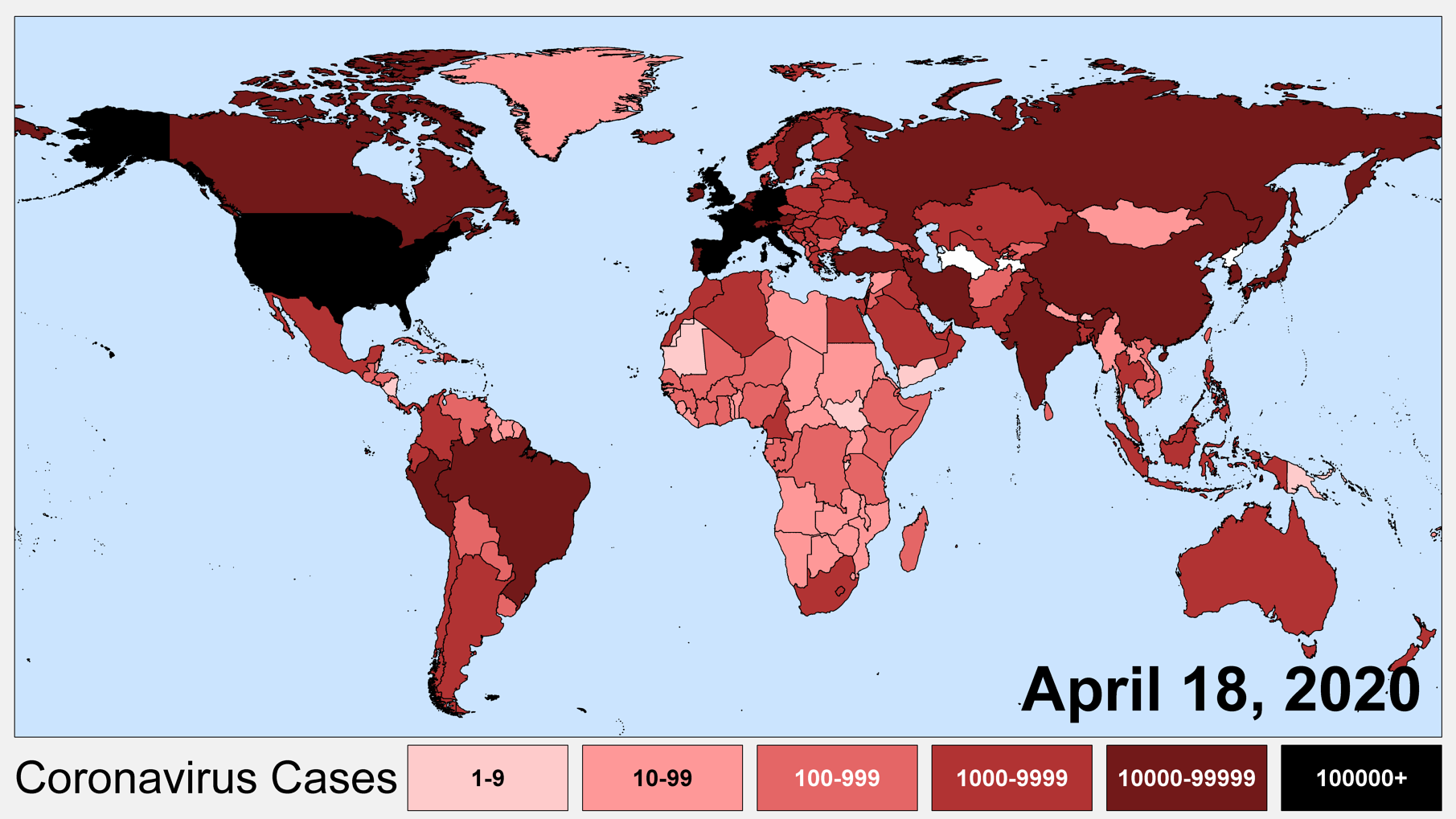
Warming weather is unlikely to stop the spread of the pandemic. Warm, sunny weather may have some limited impact on the rate of spread, but in the absence of strong interventions, the pandemic is likely to continue spreading through the summer months in most parts of the world.
The following is a summary of global temperature conditions in Berkeley Earth’s analysis of November 2019. Globally, November 2019 was the second warmest November since records began in 1850. The global mean temperature was 0.88 ± 0.05 °C above the 1951 to 1980 average. This is equivalent to being 1.26 ± 0.07 °C above the 1850 to 1900 average, […]
The following is a selected list of third-party data visualizations that have used data from Berkeley Earth. Climate Data Data explorer map of past and future temperature change produced by Carbon Brief. Local changes in the number of hot days produced by The New York Times. Temperature change in major cities produced by the BBC. […]
The following is a summary of global temperature conditions in Berkeley Earth’s analysis of October 2019. Globally, October 2019 was the second warmest October since records began in 1850. The global mean temperature was 0.99 ± 0.06 °C above the 1951 to 1980 average. This is equivalent to being 1.38 ± 0.07 °C above the 1850 to 1900 average […]

Berkeley Earth, a California-based non-profit research organization, has been preparing independent analyses of global mean temperature changes since 2013. The following is our report on global mean temperature during 2018. We conclude that 2018 was likely the fourth warmest year on Earth since 1850. Global mean temperature in 2018 was colder than 2015, 2016, and […]
Berkeley Earth, a California-based non-profit research organization, has been preparing independent analyses of global mean temperature changes since 2013. The following is our report on global mean temperature during 2017. We conclude that 2017 was likely the second warmest year on Earth since 1850. Global mean temperature in 2017 was 0.03 °C (0.05 °F) warmer […]
We're hard at work. Keep current with the latest independent climate science and analysis.
We have updated our Privacy Policy to reflect the use of personalized advertising cookies placed on our website. By continuing to use our site, you acknowledge that you accept our Privacy Policy.
I accept